Wednesday, January 8, 2014

Nasturtiums - A True "Ornamental Edible"


Today was a bit warmer and a beautiful sunny day.  The afternoon high temperature was around 10 degrees F which is a huge improvement over previous days.  The warm up over the coming days will allow us to get back out in the gardens for the take down of the expansive Holiday Lights Show (HLS).  We'll also continue our pruning efforts that were started by Pat and Urban at the end of 2013.  We had some nice volunteer assistance today.  Pat worked on some painting and other indoor projects including preparing other items for repainting.  He also headed out in the gardens for more lights retrieval where possible.  Bill was in later and processed the lights that Pat had accumulated.  Patrea and Dr. Gredler were in for priming duties and painting respectively.  I saw Jumbo Jim this morning and we talked about the 2014 veggies and edibles that we'll be using.  It's always nice to "talk shop" with Jim who is heavily involved over at the Rock County Farm & Community Garden and brings RECAPPER volunteers to the gardens frequently.  Maury ran some errands for us and we also saw Mark S. and Big John.

This blog promotes one my favorite annuals, the nasturtium (Tropaeolum sp.) which a very easy to grow plant out in the full sun garden.  I recommend letting kids plant nasturtium seeds as they are a slam dunk to grow and inspire our next generation of gardeners!  They are also edible and nutritious.  All of our "ornamental edible" collections in previous years have included nasturtiums which have edible leaves, stems, flowers and seeds (not sure about the roots...).  Native to South America, this plant can thrive in tough soils as it does natively in the rocky conditions in the Andes.  Nasturtiums don't need rich soil or fertilizer to thrive and in fact, if the soil is too rich, they will have very vigorous foliage growth at the expense of the blooms which will be more sparse.  There are well over 100 cultivated varieties of nasturtiums with a wide range of flower colors and some variable flower forms.  All  your seed catalogs carry a wide range of varieties and the seed is inexpensive.  Some varieties also feature "marbled" foliage which adds additional interest on these rounded leaves.  Above is the 'Alaska Scarlet' variety at the Dubuque (IA) Botanical Garden which includes the marbled foliage.  While nasturtiums will tolerate part sun, they tend to bloom less and can become stretched out and sparse.  Look at how exquisite the blooms (1"-2" diameter) are when seen in close proximity (see below).


The marbled nasturtiums can be purchased with a specific color like the 'Alaska Salmon' seen above. There is also 'Alaska Scarlet' (top photo), 'Alaska Gold' and the 'Alaska Mixed' with all three flower shades.  Note in the three photos below that no leaf is the same and maximum solar exposure results in better variegation.  Nasturtiums have a peppery taste and have long been used to spice up a salad or sandwich.  Their value as an edible garnish is apparent as well. It is certainly an acquired taste for some and should be sampled by those new to "nasturtium nibbling."  The leaves are high in vitamin C and iron and have long been used as a natural antibiotic.  There are countless herbal uses of this plant and in the mid 20th century, the dried seeds were ground and used as a pepper substitute and in herbal seasoning salts.  See some of the photos further down to see the value of nasturtiums as an edger along a border or cascading over a wall.  When you select varieties note that some are "clumpers" and some are "trailers".  This designation will be important as you consider the space to be filled.   I've seen them used in containers and hanging baskets but in those cases, they do require some light fertilization to keep the foliage looking good.  Keep in mind that the trailing varieties will take up some real estate but can be sheared back severely and will bounce back readily.  You really only need one seed per square foot for ample coverage by mid summer.  Order some seeds for May planting!


the herb garden at Olbrich Botanical Gardens (Madison, WI)

Tuesday, January 7, 2014

"Dead" Sedges Are Lively


Today was another arctic one with the thermometer reading -13 degrees F this morning.  The wind chill was also brutal but it sounds like we'll be on the upswing with increasing temperatures towards the end of the week.  The fact that the water pipes in my basement haven't burst (knock on wood) is only due to the judicious and expensive use of space heaters!  The gardens were closed again today but will re-open tomorrow.  We did have some action at the Horticulture Center with Larry and Bill working on various projects.  Dr. Gredler and Pat did some painting and Maury ran errands for us and did some troubleshooting regarding heating issues.  We also saw Urban and had our first Home Garden Tour (HGT) Committee meeting of the year with Tom S., Sue S., Barb, Jean, Cora, Linda, Bill O. and Dave G.  The good news is that we have all our HGT gardens (nine) squared away and mark July 12th, 2014 on your calendars for this popular event and fundraiser.

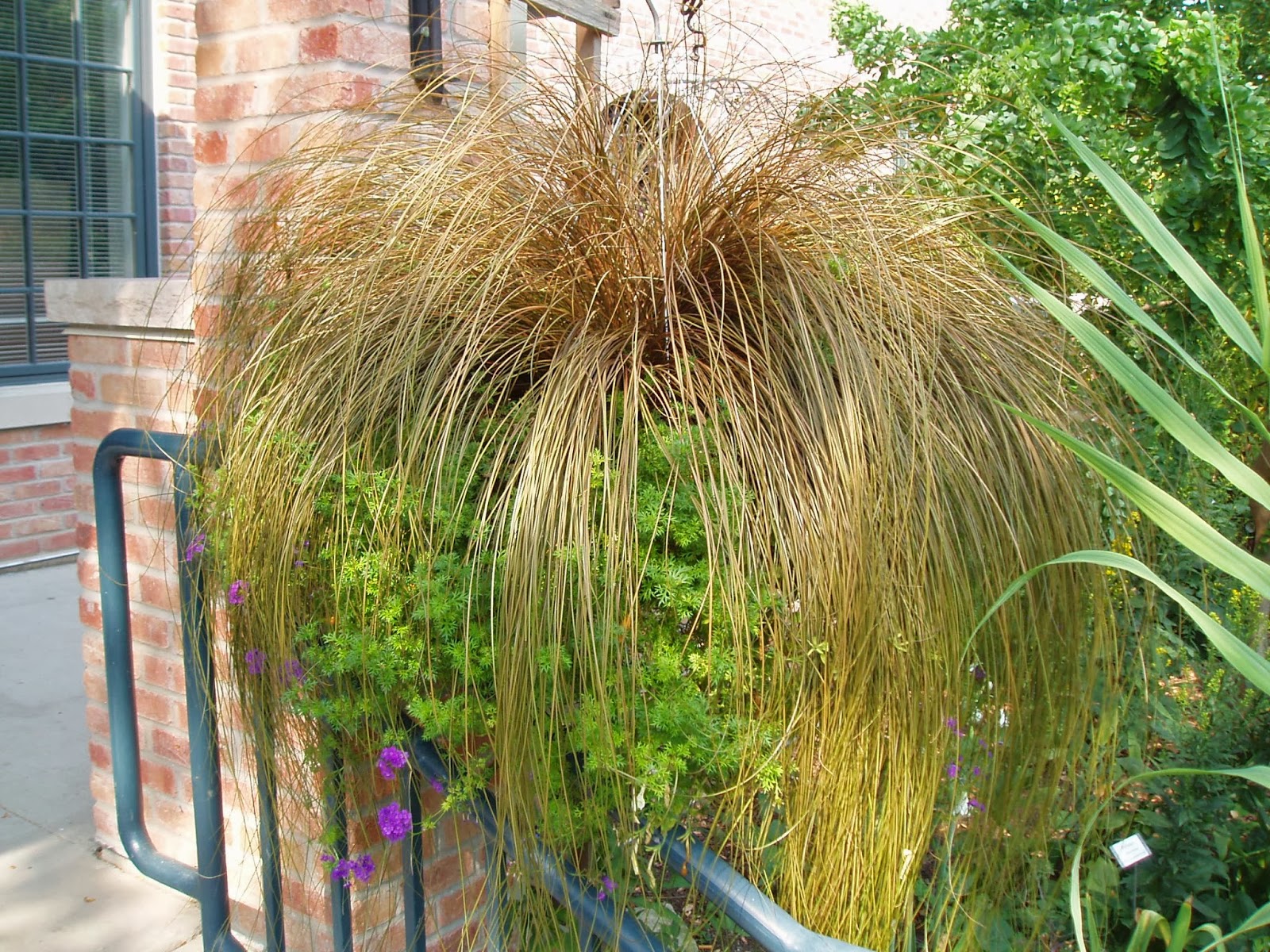
My blog today pays tribute to the use of the commonly called "dead sedges" like 'Bronzita' (Carex flagellifera) seen above.  These grasses are called "dead" due to their copper-bronze coloration.  However, these grasses can be very effective in the full or part sun border and for a wide range of container uses as evidenced below.  Their coloration combines well with yellows, red, oranges and will not be overlooked if used effectively.  The image below (borrowed from the blog of Diane Furgurson, her photo) shows Mali the Sheepdog at the Montreal Botanical Garden.  This mosaiculture (look this term up and see the cool things happening with plants...) puppy was made with the same grass seen above.  We use the dead sedges as annuals but have seen some come back with warm winters and plenty of snow cover.  Everything shown here is hardy in zone 7 and warmer.  It is important to note that these grasses will keep their color well in to late November and are superb for extended interest or in the late season container.  We find these grasses do the best in full sun in moist, well-drained soils.  We've not observed any sort of flowering with these sedges during our growing season but they are selected primarily for foliage color, texture and form.  The two primary species I'm featuring are Carex flagellifera which gets around 15" tall and Carex buchananii which can get close to 24" or so.  Moisture, fertilizer and sun exposure are all factors in the ultimate size and vigor of these selections.


I'm a big fan of the leatherleaf sedge (Carex buchananii) as seen above as a textural contributor in this tropical composition.  This grass relative has a nice narrow leaf blade and can be used as the centerpiece of a small or medium container. Even a solitary specimen (see directly below) can be effective.  Used in repetition along a sunny border, this selection will lead the eye and add billowy texture as well.  There are some nice named selections of this species which we plant by the hundreds every year.  We've done larger plantings of this species en masse and the effect is dazzling.  The varieties 'Red Fox' and 'Red Rooster' tend to be a bit more upright and have more of a "reddish cast" (see 'Red Rooster' below).  There is a green form (Carex buchananii f. viridis 'Green Twist') but it doesn't excite me like the bronze/red selections.


'Red Fox' leatherleaf sedge (Carex buchananii)
'Red Rooster' leatherleaf sedge (Carex buchananii)
'Red Rooster' leatherleaf sedge (Carex buchananii) in container
from left to right - 'Red Fox', straight species in center and 'Red Rooster' to the right
crazy use of leatherleaf sedge (Carex buchananii) in re-purposed PVC pipe planters (at RBG)

We also use a lot of drooping sedges or weeping brown sedges (Carex flagellifera) as it is called.  Their value in containers is very evident in the photos included here.  'Bronzita' seen in the top photo is a variety that is quite popular although I think they all look pretty similar.  The variety above and most of those below are probably the variety 'Toffee Twist' which is certainly a must have.  Their best effect with this drooping form is in a location (container, wall edge, hanging basket, etc.) where they can be free to spill over.  When we use them in containers, we very frequently see visitors touching them as they are a "tactile magnet" too!  However, we have used them in the ground and as seen below, they look like a clump of hair emerging out of the soil!  


not exactly sure which "dead sedge" is in the middle but what a nice grassy medley (Olbrich Botanical Gardens, Madison, WI)
  
Although not the same coppery color as those mentioned above, the orange New Zealand sedge (Carex testacea) has its own value and impact in the full sun garden as well.  This species will get about 18"-24" tall (depending on moisture and other happiness factors) and as seen both above and below, has a nice orange casting to the foliage.  The variety 'Prairie Fire' can be seen above (and second photo below) and is thought to have brighter coloration than the standard species.  Hardy to zone 6, we've seen these come back on occasion although their value as an annual should be quite evident.  The best coloration is in late summer in to fall.


I just had to share some photos that Marsha M. sent me.  She took these at home yesterday and ducked outside in the arctic chill to capture this squirrel and hawk?  Is this a hawk or other small bird of prey?  Regardless, great shots Marsha and thanks for sharing.  We could put captions on both these animals with something like "I've had enough of winter already!!!".  


Monday, January 6, 2014

FRIGID & Sunny


Our digital thermometer above was reading -17.7 degrees F this morning which doesn't express the -45 degree F windchill that we've all been enjoying this morning.  I'm very concerned for area wildlife and hope they can nestle down and make it through this frigid spell.  We're going through about 40 lbs. of birdseed weekly at home although the squirrels aren't shy about getting their share as well.  Understandably, the gardens (and all local schools) were officially closed today but a few of us came to the Horticulture Center for some indoor work as seen below.  Ron (directly below) was working on a carpentry project (top secret) as was Maury (second photo down).  Gene (third photo down) was resealing some benches and both Pat and Dr. Gredler came in for painting duties.  Pat went out in the gardens briefly and brought back some lights for processing.  The wind was brutal.  Larry had various projects and we also saw Dick H. and Bill O.  I'm neck deep in catalogs, presentation preparation, 2013 closure projects, etc.  I enjoy this time of year but the winter months go quickly...


above are some components to our top secret project (soon to be revealed)

The image of above is a portion of our "Pollinator's Paradise" theme in the Nancy Yahr Memorial Children's Garden in 2013.  This garden was very well received by visitors and pollinators alike!  Below is our All-America Selections (AAS) display from last year which won first place in the AAS Landscape Design Contest (Category III - over 100,000 visitors) for the second year in a row.  We have entered the contest again and are focusing on a "three-peat"!  I show these two photos to mention that this year will include a hybrid of these two collections.  We will still be doing the "Pollinator's Paradise" theme in the children's garden but will be incorporating the best AAS winners for actively attracting pollinators.  While our 2013 AAS collection included over 150 historic winners (1933 through 2013), we'll focus on the best winners for attracting bees, butterflies, hummingbirds, etc.  There will also be some other interesting new twists in this space and both signage and educational offerings will be paramount.  The original space seen below will be converted this year to display historic plants that were grown by Thomas Jefferson at Monticello.  We'll be utilizing the existing thirteen beds and will feature over 150 plants (perennials, annuals and vegetables) as part of a two-year theme.  We have lots of fun ideas for the garden as we celebrate our 25th Anniversary!  If you're reading this blog and aren't currently a RBG member, please consider the value of supporting the gardens and our mission of providing horticultural education and appreciation for everyone.  At the bottom are just two of the many "focus plants" that we'll utilize in our "AAS Centric Pollinator's Paradise" theme.


'Prairie Sun' gloriosa daisy (Rudbeckia hirta) - annual (also 2003 AAS Winner)
butterfly weed (Asclepias tuberosa) - perennial

Saturday, January 4, 2014

HLS Success!


Stay warm everyone!  What crazy weather we're having and those recurring cold temperatures aren't fun for anyone (including our local wildlife!).  If you've ever thought about feeding the birds (and crafty squirrels), this would be a vital time to get started.  I can envision the area deer population getting creative with nibbling here shortly out in the gardens.  Watch all the wildlife tracks around your yard and sympathize with any creature having to deal with these dangerous temperatures (including our mail carriers, etc.).

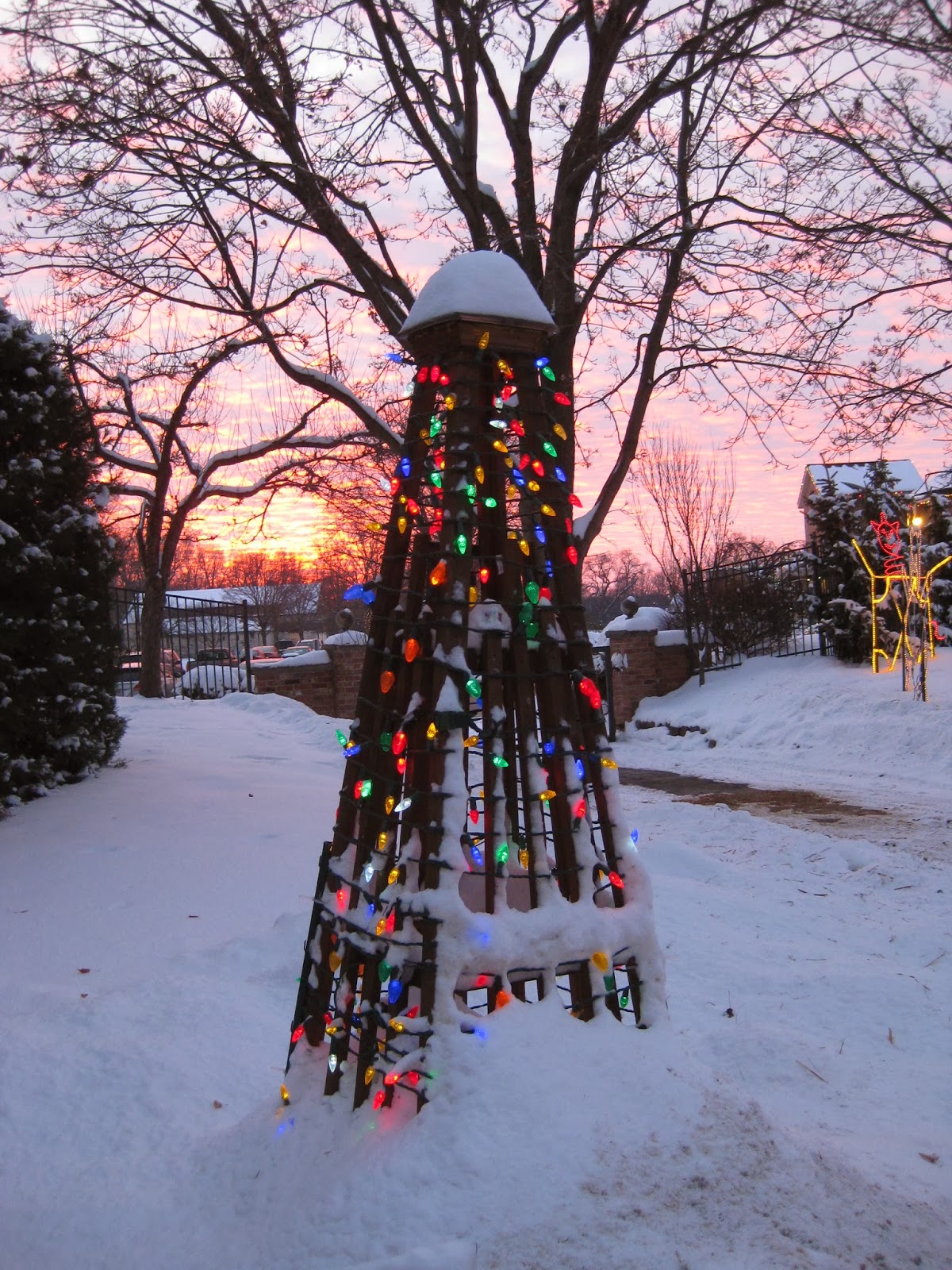
The Holiday Lights Show (HLS) finished on December 29th which was a very chilly night.  The night previous was actually quite mild and saw an almost record crowd.  While we don't have the final attendance numbers yet, it looks like the 2013 HLS will compare favorably with last year.  We will leave some of the lights up for two rental functions this month but will ultimately start taking down the show once the weather warms a bit.  Our intent was to start this past Thursday but it was too darn cold.  That's not to say there wasn't plenty of indoor work occurring including painting (see Maury at the bottom), priming, carpentry, etc.  I've been off these past two weeks with the exception of HLS duties (snow removal included) so haven't seen everyone that has been popping in daily.  However, I'm back in action this Monday with a full plate for the next three months.