Wednesday, November 5, 2008

The Last Best Day Of The Year?!

The Bloodgood Japanese maple (Acer palmatum 'Bloodgood') is normally a deep maroon during the summer and is quite showy from May thru September. As fall progresses, the fall color becomes increasingly scarlet and really glows with sunlight pouring thru. Japanese maples, while winter hardy here, can be a bit touchy and do benefit from a protected location that minimizes winter winds. The shot above was taken in our Japanese garden today.

We had three volunteers (Shelly, J.C. and Linda) working in our woodland walk garden today. Marianne tidied up, planted bulbs and worked on lights. Marv and Terry decorated with lights all day and put up some displays. Dr. Gredler and Bill spread straw over a large, newly seeded area and Jerry continued pruning and hauling debris. Rick and Tony worked on composting and lights work. We had LP Tree Service (Janesville) come today and help put up some holiday lights in our taller trees. We sure appreciate their help! I ran some cords but mainly bounced around to check on everyone. Great day!

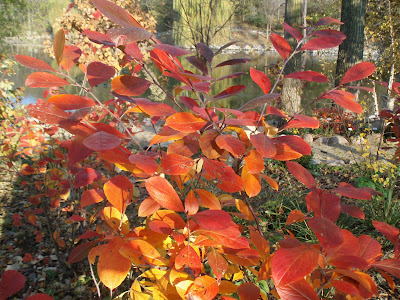
Nice fall color on the smooth witherod viburnum (Viburnum nudum 'Winterthur') to the left. Native to lowlands out East (Connecticut) and down thru Florida and Louisiana, this viburnum has fragrant white flower clusters in spring, summer berries and this wonderful fall color on bold, glossy leaves. This hardy variety only gets 6' tall or so and is a nice specimen in the right place. The straight species (Viburnum nudum) can get 12' tall so this variety is a nice compromise in terms of scale. The hybrid maple to the right was all green three days ago and exploded with this orangey-red color. This is one of those hybrid maple crosses between the Shantung maple (Acer truncatum) and Norway maple (Acer platanoides). The description from J. Frank Schmidt Nursery below is a great description of this wonderful maple. Note the medium size! The picture at the bottom is the nice yellow fall color of the Norway maples this year (better color than most years!).
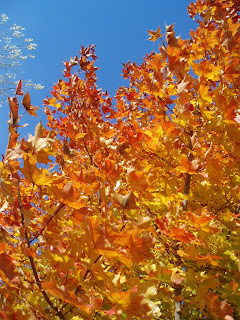
Pacific Sunset® Maple (Acer truncatum x A. platanoides 'Warrenred' P.P. No. 7433) is a hybrid of Acer truncatum and Acer platanoides that combines the best characteristics of the parents in a medium sized shade tree. Dark glossy leaves, drought resistance, orange to red fall color and a smaller ultimate size are inherited from Shantung Maple (Acer truncatum). The Norway parent (Acer platanoides) contributes faster growth, caliper development at an early age, larger leaves and adaptability to varied growing conditions. Its fine textured branch structure evolves to a rounded crown and a mature height of about 30 feet and a spread of about 25 feet. Hardiness is USDA Zone 4b.


Tuesday, November 4, 2008

No Time For Politics

This image of double grape hyacinths (Muscari armeniacum 'Fantasy Creation') was not taken today but back in early May. Hopefully all of the politics and campaigning hasn't distracted you from planting spring blooming bulbs out in the garden. It's not too late! We just planted over 2,000 bulbs (including those above) in our woodland walk garden over the past couple of days. Many garden centers and other retailers have bulbs for sale. Consider planting some ASAP and even give some thought to planting some bulbs out in your turf. These "bulb lawns" as they're termed are a nice way to get color in your dormant lawn before it greens up and needs to be mown. At the bottom of this blog posting is an article I wrote on bulb lawns that might spur some interest in this approach.
Another nice day of weather with much accomplished. Janice, Kay and Barb did lots of perennial clearing and tidying up in the woodland walk garden. Larry helped with the lights show and worked on various tasks. Jerry has been working on pruning and cutting back select shrubs. Rick and Tony planted bulbs and helped with the lights show as well. Tuesday is usually a smaller crowd but we get a lot done. I did some shopping for additional lights and strung more cords. Nice shot to the right in our parking lot of maiden grass (Miscanthus sinensis 'Blondo'). This variety has beautiful "plumes" and reminds many of pampas grass (which is not hardy here). This grass looks great thru the entire winter. Nice shot today of the alpine garden. Our dwarf and miniature conifers are looking good.

This is the time of year that we start to receive full-color catalogs extolling the virtues of tulips, daffodils, hyacinths and other bulbs in our spring landscapes. Garden centers will be carrying a full line of wonderful bulbs that when planted this fall, will be a colorful component in our gardens as winter recedes and spring begins to awaken. Traditionally incorporated into our traditional beds and borders, many bulbs will also establish well in our lawns and come and go before the first mowing. Incorporating bulbs into the lawn is not a new concept and has been perfected in Europe. These “bulb lawns” in North America are becoming more popular as they can be quite affordable and are very low maintenance.

Spring blooming bulbs come in a wide spectrum of sizes, colors, blooming times and of course, cost. Bulbs considered for a bulb lawn need to be very early bloomers that will emerge, bloom and start to go dormant prior to the first traditional mowing of the surrounding turf. This concept is different from establishing larger bulbs such as daffodils into meadow areas because the surrounding grass cannot be cut until July because of the persistent bulb foliage. See the accompanying chart for some great bulbs that will establish well in our lawns and provide spring after spring of enjoyment before it’s time to fire up the lawn mower.

Many of what are termed “minor bulbs” will thrive in the lawn setting and are quite small and easy to plant into an established lawn. You can plant these bulbs in patches or randomly scatter them around an area, planting them where they lie. When choosing a lawn space to establish bulbs, target areas that don’t have a lot of foot traffic during the year, primarily in spring. Soil compaction on your turf will affect the health of your bulbs. The majority of these minor bulbs will tolerate most soils provided that they are well drained (no standing water) and not heavy clay. A normal lawn fertilizing regimen will also benefit the bulbs beneath the lawn, particularly a September application.

Planting of these bulbs should be accomplished in October but can be done later if the ground is not frozen. Estimate the height of these bulbs and understand that you’ll have to plant each bulb three times the height of the bulb. For instance, a 1” tall bulb should be planted 3” deep. Use a narrow trowel or a pointed dibble that will allow you to penetrate the turf and plant the bulb at the appropriate depth. Another option is to take a plug aerator around your turf. This aerator will remove ½” wide plugs that can be 1” or more deep, thus saving all of your efforts to get thru the turf to plant bulbs. These holes are then started for you and you can widen them as needed. This aeration will also improve the health of your lawn.

As you plant bulbs in the holes throughout your lawn, sprinkle Milorganite fertilizer over all of the holes before you cover them up. This fertilizer gives the bulbs a boost but also has an odor that will deter rodents from digging up your newly planted treasures. Provide pulverized topsoil or other material to smooth over all of your holes as needed when you’re done. The tops of the bulbs lying in the holes should be covered by soil. Keep newly planted bulbs watered until the ground freezes. You should be rewarded in spring with a plethora of blooming bulbs emerging from the lawn. Leave these bulbs, and their foliage as long as possible before mowing. Most should be done prior to Mother’s Day allowing for mid to late May mowing.

The warm days of April and May bring our gardening senses alive and we all enjoy watching our lawns turn a lush green in response to warming rains. Why not “dress up” your ubiquitous lawn with drifts of color offered by fall-planted bulbs. Your lawn will be none the worse for wear and once established, a bulb lawn offers enjoyment for countless springs.


Monday, November 3, 2008

A Little Touch of August


Temperatures today in the sun were in the mid 70s. It was t-shirt weather which is much appreciated in a Wisconsin November! The colorful leaves above, while looking like maple leaves are actually from the sweet gum (Liquidambar styraciflua). This specimen is far north of its native range which is in the Eastern U.S., down to Florida and across Texas and Northern Mexico. I remember nice specimens in central Illinois as well but many are surprised by our 35' tall specimen and of course the multiple colors on this tree are a huge asset. The fruit is a woody, spikey ball that I remember using as a projectile in my younger years. Nice fall color below of one of our cutleaf, Japanese maples (Acer palmatum, variety unknown).
We had a great day of productivity with the Grumpies working on electrical work, carpentry, woodchipping, leaf cleanup and other odd jobs. Marv and Terry strung icicle lights and set up more displays. Marianne continued stringing out luminaries while Janice and Jerry focused on gardening which is still very important this time of year. Rick and Tony rototilled, woodchipped and planted bulbs. Larry set up more displays and Dr. Gredler worked on spreading grass seed and mowing. Morale was quite high with such favorable weather! Below is some more fall color. The black chokeberry (Aronia melanocarpa) usually has a decent fall color but it has really turned a bright red this year. This shrub is good in part shade and the shot below was taken in our woodland walk garden. The bottom image is some Boston ivy (Parthenocissus tricuspidata) working up our archway that leads from the reception garden to the sunken garden. This archway is on permanent load from the Rock County Historical Society and was the original archway leading in the Parker Pen World Headquarters (in Janesville). Rotary Gardens includes lots of local history and hardscape elements from around the community.


Sunday, November 2, 2008

Internet Challenges!

As I type, I feel like I'm on borrowed time. I've tried to post blogs both Friday and Saturday but couldn't get internet access at home, or it was so sporadic that I couldn't get much progress and couldn't log on to my blog until tonite. It's working ok for now. Nice fall color above of the native Juneberry (Amelanchier lamarckii). Some botanists feel this is a hybrid between two other native serviceberry species but others feel it is quite distinct. This is a fall color shot that my father-in-law took in his backyard where this red just pops! As you can imagine, edible fruits come in June after nice white flower clusters in early May. Birds will get to the berries before you do in most cases. Below is a nice shot of a portion of our bronze "bear sculpture" that was placed out in the garden this year. This stump of wood (bronze) has five bear cubs scrambling all over it and we finally put it outside after having it donated over 8 years ago, then sitting in storage and eventually being in the way over in our horticulture center. It looks great out in the garden though! Lots of activities coming up this week with a major shift towards preparing for the lights show. Needless to say, we had a great Friday with lots of progress both in the garden and with the lights show. We'll take advantage of the upcoming mild days as well. The bottom images is the fall color of the Shantung maple (Acer truncatum) with a blend of reds, oranges and yellows on smallish leaves. New crosses between this species of maple and the Norway maple (Acer platanoides) look to be exciting.


Thursday, October 30, 2008

A Brief Taste of September

Despite the expected brisk morning, the day warmed up nicely to 60 and was perfect working weather. The nice yellow fall color above is from the swamp white oak (Quercus bicolor). This oak is typically found in lowlands and along streams. Long-lived and durable, this oak can also tolerate average landscape soils and can live many years. Here it's positioned along our pond and the fall color is just starting to really peak.

We had another great Grumpy day with the fellas working on collecting leaves, bringing in spent hanging baskets, carpentry work and various odds and ends. Glenna and Marilyn helped Janice with lights and some gardening after break. Marianne came in again as a volunteer to get us ahead on the lights (hopefully). Jerry picked up many loads of debris and Larry was pulled in many directions helping others, working on the lights show and bringing in garden signs. Rick and Tony worked on woodchipping, composting, collecting mulch and graveling. I strung extension cords (pretty exciting work). Below is one of the fullmoon maples (Acer shirasawanum 'Palmatifolium') starting to really glow with fall color. I hope this one makes it thru our winter although it did make it thru the tough winter here last year.
As we continue to mulch/shred leaves and apply them over our annual beds I remembered an article I wrote about utilizing leaves in the garden. It is included below:

October days in Wisconsin bring us closer to enjoying the beautiful colors of autumn as deciduous trees, shrubs and various other plants change leaf color. Yellows, golds, oranges, reds, purples and all of the colors in between can be enjoyed and are celebrated in our state. Of course the price we pay with deciduous plants is the arduous task of raking, collecting and disposing of the leaves as they clutter our yards, sidewalks and gutters. Leaves have been important in forest environments for millennia. No one is out there raking and collecting leaves in the forest! Consider utilizing your leaves “on site” as a mulch for your garden or as part of a compost pile. With minimal effort, your annual deluge of leaves can become an important part of achieving gardening success.

It is important to note that leaves should ideally be shredded for fall use in the garden. Larger leaves, if used whole in the garden may have a tendency to mat down and negatively affect the penetration of air and water into the soil. Whole leaves may also deter spring growth as new plants struggle to extend thru this layer and they can be slow to break down into the soil. Some exceptions would include very small leaves (i.e. honeylocust) that can be used directly.

Shredding or mulching these leaves will create a product that has myriad uses in the home garden. There is a wide range of equipment that will shred leaves although a mower may be a good way of producing this product as well. Mowers with collection bags should be easy but if using a side discharge mower, set it at its highest setting and position plywood or another “backdrop” to help accumulate leaves. Another option is to mulch leaves right in to your turf areas with your lawn mower. Research has shown that this activity will create a lawn that greens up faster in spring, requires less fertilization and shows more vigor, thereby reducing weed competition.

Shredded leaves have been shown to improve soil tilth (structure) when incorporated in to the soil and will improve the “water holding capacity” of the soil and also add nutrients that will benefit surrounding plant material. When used as a mulch, shredded leaves can reduce soil water losses and suppress weeds. A 2-3” layer of shredded leaves (applied after frost) used around plantings will help maintain a uniform soil temperature all winter and will protect tender root systems. This shredded leaf “blanket” will also help prevent frost upheaval caused by the thawing and freezing cycles in late winter and early spring.

Shredded leaves are a great addition to your annual beds in fall and can be rototilled right in or left to break down over the winter. Scatter a bit of soil lightly over the top of a shredded leaf layer to help keep it in place. If developing a new area for planting next spring, lay five layers of newspaper over the area, cover with 3-4” of shredded leaves and scatter loose soil over the top to keep everything in place. Most weeds will be smothered by spring and you’re ready to prepare this area for planting. A 4-6” layer of shredded leaves can also be used to improve the soil in compacted, shady areas where grass will not grow.

Consider utilizing your shredded leaves in a compost pile. You can simply compost just the leaves and in 1-2 years, you will have a product called leaf mold. Make sure your leaf pile has adequate sunlight, air circulation and moisture. Periodically flip the pile over to promote more active decomposition. This special, fungus-rich compost is a great soil conditioner and helps with moisture retention. Consider researching this technique of creating leaf mold as it is an ecologically sound way of creating a wonderful soil additive for the garden.

Shredded leaves can also be an important component in a standard compost pile. Position your compost pile in full sun or part shade directly on soil. Alternate 3-4” layers of wet, green material with dry brown material (shredded leaves). The “green” material can be lawn clippings and garden waste. Add kitchen waste to this mix but avoid putting in any meat, fish, bones, dairy products, fats, oils, pet waste, diseased plant material or hardy weeds. Mix or flip this pile every 2 weeks and don’t let it dry out. There are many resources and products that will help you learn to compost garden waste. Shredded leaves can be a great component of your “garden recycling” program so before you bag them up, ship them off or rake them away, consider their value in your garden.

Wednesday, October 29, 2008

Tropicals in Kenosha

Above is the start of fall coloration on the Marmo Freeman maple (Acer x freemanii 'Morton') which is a selection from the Morton Arboretum (Lisle, IL). This hybrid has the nice attributes of its parents, the silver maple (Acer saccharinum) and red maple (Acer rubrum). This tree has the fast growth rate of the silver maple and the harder wood and fall color the the red maple. There seems to be great variability in the timing of fall color with Freeman maples. We have some that have dropped leaves already and this one is just starting to turn color.


I had another talk (Using Tropicals and Containers) in the Kenosha area (Bristol) for Master Gardeners. It was another great group with lots of interesting and valid questions. It's always nice giving talk to gardeners, particularly those that haven't visited the gardens yet! I like to entice potential visitors to the gardens and have no shame in using lots of images from Rotary Gardens. Nice shot below of the immature green cones on our bald cypress (Taxodium distichum) in the arboretum. Bald cypress are tough plants and while in the pine family, they are a deciduous conifer and lose their needles in fall (as seen below). Bald cypress have a wide native range (not WI, although hardy in southern WI) and can tolerate extremely damp soils and areas with prolonged flooding. In southern swamps, bald cypress will form "knees" near the primary trunk. There is much debate about these rounded protrusions with many speculating that they are meant for structural support in soggy locations while others postulate that they are involved with gas exchange (carbon dioxide and oxygen). Regardless, it's a neat tree that is quite urban tolerant and durable. The spring image at the bottom (note the tulips) is to remind you to get out there and plant your spring blooming bulbs. The time spent now is always worth it when you enjoy the results in spring. We may be in for a doozy of a winter so why not maximize your spring color (and therapy) with some effort and expense now. Many bulbs are going on sale now and as long as you can dig a hole, go for it!!!


Tuesday, October 28, 2008

A Beautiful October Day

Nice fall color of the native cranberrybush viburnum (Viburnum trilobum) with a nice backing of the clear yellow fall color of mulberry (Morus alba). It was downright frigid this morning but we ended up with a sunny day with blue skies and temperatures in the 50s. The rest of the week will be a bit warmer and we hope to accomplish lots of gardening and preparations for our lights show. Janice took Kay and Heidi out to clear perennials and tidy up. I am always amazed at not only the volume of work they do but their attention to details like tidying the area up before leaving. Jerry and Bill continued garden clean-up and cutting back shrubs. Larry worked on putting up his arches and drained our "ever flowing urn". He'll focus more on water features later this week as we like to drain and clean everything before it gets too cold. Marianne and Marv popped in and Marianne worked on converting our candy cane displays to LED lights. Barb, a new volunteer, continued with that work and did a nice job. Tony and Rick rototilled, spread gravel, hauled woodchips and stacked rock. A full day to day the least. They also finished the bench area below which was originally a bench set on soil amongst weeds. Looks great now. I ran about 3,000 feet of extension cords in preparation for the lights show. The image below is Dr. Gredler's contribution to the gardens this time of year. Our Grasshopper riding mower has a shredding attachment with a hopper. As he collects and shred leaves, he's able to dump these on our annual beds and we then rototill them in. We like to use as many shredded leaves as possible on our annual beds every fall.