Friday, February 22, 2013

What's Blooming In Seven Months?


With another 3-5" of fluffy accumulation drifting down on the gardens today, it's difficult not to think of spring and the rest of the growing season when flowers can be enjoyed.  Odd weather patterns have affected the bloom times of not only our spring bulbs but just about everything else as well.  The only month in the past 14 months that we haven't had something blooming out in the gardens is December of 2012.  We had blooms last year from late January through November.  With hellebores (Helleborus) and snowdrop (Galanthus) starting to bloom this past January, we'll see where the weather patterns take us this year.  

The shot above was taken this afternoon out in the Horticulture Center yard.  These slanted obelisks will be placed on the slope of our front entrance garden in April and will become prominent vertical elements in that orange themed garden this year.  It was a quiet day today at the Horticulture Center.  Pat and Dr. Gredler were both in for painting duties and Doc spent time putting sealer on our cedar (non-painted) obelisks.  Bill O. came in to help with snow removal efforts and Dick H. did a nice job plowing out our parking lot.  I imagine he'll be back later tonight after the snow has finished.  Tina B. stopped by with some nice photos of the moss rose (Portulaca) collection from last year and we talked about some exciting photo opportunities in the 2013 garden.  I spent the day working on myriad projects and will continue ordering plants next week and finalizing details for many of our upcoming spring events (compost sale, tree sale, spring plant sale, etc.).  


While many of our perennials and annuals wont "go the distance" through the entire summer, there are some plants that wait patiently for September and October to strut their stuff.  Toadlilies (Tricyrtis sp.) fall in to that category.  Native to China, Japan and other portions of Asia, these perennials do well in partly shaded locations with moist soils.  There are quite a few species, hybrids and interesting selections with ornamental foliage.  While some species start blooming in mid-summer, most of the selections at RBG don't start until late September and early October.  With the warm fall weather over the past couple of years, the toadlilies have bloomed well.  However, if we get an early, hard frost (under 25 degrees F or so), the flowers are "toast" if opened already and will turn black.  This seems to happen every three to five years.  However, the exquisite blooms are more than enough reason to include these selections for late season flower interest.  The most successful toadlily that we have at RBG is 'Miyazaki' (Tricyrtis hirta) seen directly above and in the two photos below.  Note in the second photo down how this plant "arcs" and cascades.  This habit or form is characteristic of this species although others are more upright in form.  Each stem has dozens of buds and the show is quite impressive despite the smaller flower size (1.5" in diameter).  The flowers are "orchid-like" in appearance and this selection will bloom for a solid three weeks or until hard frost (whichever comes first!).  We've tried dozens of selections, some having interesting foliage coloration, patterns or variegation.  Both 'Lightning Strike' and 'Golden Gleam' (both seen below) also have nice, late flowers.  Some of my other favorites are included below.  Note that identification is under each image.  Accomplish additional research on these selections for more information but it's not too early to consider what will be blooming in your late season garden.  Keep the show going and consider using some toadlilies!


Tricyrtis hirta 'Miyazaki' (two photos above)
Tricyrtis hirta (straight species)
Tricyrtis hirta 'Lightning Strike'
Tricyrtis hirta 'Golden Gleam'
Tricyrtis hybrida 'Sinonome'
Tricyrtis formosana 'Gilt Edge' (Boerner Botanic Garden)
Tricyrtis formosana 'Dark Beauty'

Thursday, February 21, 2013

Hostas At RBG


The foursome above had a well-received presentation at Olbrich Botanical Gardens (Madison, WI) last night for the Wisconsin Hardy Plant Society monthly meeting.  I would guess we had about 150 in attendance and the night went well. From left to right are yours truly, Mark Konlock (Green Bay Botanical Gardens), Ed Lyon (Allen Centennial Gardens) and Jeff Epping (Olbrich Botanical Gardens).  We had a nice dinner before the event and chatted about our challenges, 2013 plans, collections and certainly plants.  Once the presentation started, we bounced the microphone around and described a lot of different plants with supporting comments as needed.  I thought it went smoothly over the 90 minutes and the four of us have talked about doing this again in the future.  One of my featured plants last night was the 'Sparkler' hosta (see directly below) which is a nice variety out of Walters Gardens (2011).  I noted many members of the Wisconsin Hosta Society (www.wihostasociety.org/) in the audience and was glad that we had at least one hosta represented!  I've included some of my other favorite varieties further below and all are identified underneath the image.  RBG is a National Display Garden for the American Hosta Society and will continue to augment our collection annually.


We had some steady progress in the Horticulture Center with painting, sanding, resealing, etc.  With significant snow coming tomorrow, we'll see how challenging it will be although we can still use the moisture. Dr. Gredler and Pat continued working on obelisks with Doc putting sealer on our cedar obelisks and Pat continuing the painting of the giant obelisk (bright yellow).  Dave, Jim and Vern were all working on bench repair, sanding and resealing duties.  Dick H. prepared (cut and bent) more new aluminum stakes for our plant labels and Terry popped in as well.  Bill O. and Larry worked on various projects and Janice was in for more plant sale preparations.  We also saw Mary F.  We'll soon be producing our vegetable labels which is a monumental task from printing to processing to sorting and eventually placing these labels in 18,000 vegetable cells!  

Hosta 'El Nino'
Hosta 'Carolina Blue'
Hosta 'Wolverine'
Hosta 'Electrocution'
Hosta 'Grand Prize'
Hosta 'White Dove'
Hosta 'Spacious Skies' (Olbrich)
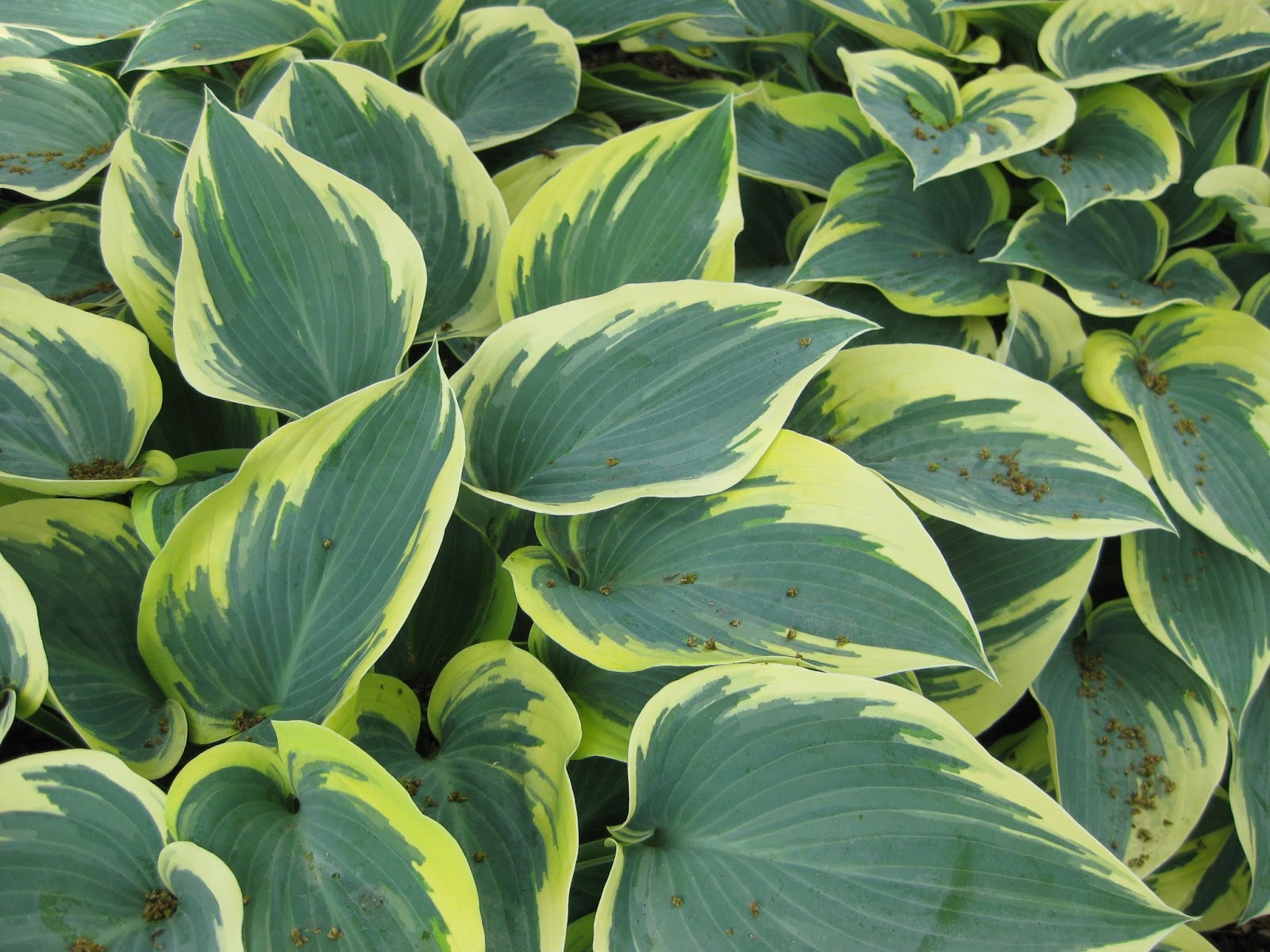
Hosta 'First Frost'
Hosta 'Orange Marmalade'

Wednesday, February 20, 2013

RBG Welcomes Brent Back!


We're excited to have Brent Heath coming back to RBG this April.  Brent and his wife Becky own Brent & Becky's Bulbs (www.brentandbeckysbulbs.com/) and have been long supporters of the gardens.  Brent was part of our Bulbmania Symposium back in 2001 and I've seen him multiple times since then but not in Janesville.  He and Becky are very well connected in the horticulture industry (internationally) and are extremely knowledgeable.  We order plenty of both summer bulbs/tropicals from Brent and Becky as well as many of our fall-planted, spring-blooming bulbs too!  Their products are well-represented at RBG.  Brent will be presenting The Tropical Paradise Garden (Tuesday, April 16th, from 6 pm until 8 pm) which includes a presentation on how to weave tropicals throughout your landscape.  The second component is a "plant your own" fragrant container garden with tropicals.  Brent will also do a book signing of his wonderful books on tulips and daffodils.  This experience is limited to 35 participants so check out more details at the RBG website (www.rotarybotanicalgardens.org).  The photo above is a tropical border at Olbrich Botanical Gardens (Madison, WI) from last year and below is one of our 2012 containers at RBG containing 'Diamond Head' elephant ear (Colocasia esculenta), 'Orange King' coleus (Solenostemon scutellarioides) and 'Sweet Caroline Red' sweet potato vine (Ipomoea batatas).  


Tonight I'm presenting at the Wisconsin Hardy Plant Society (www.wisconsinhardyplantsociety.org/) meeting at Olbrich Botanical Gardens (Madison, WI).  This will be a fun talk on plants as I'm presenting along with Ed Lyon (Director of Allen Centennial Gardens and former RBG Exec. Director), Jeff Epping (Director of Horticulture - Olbrich) and Mark Konlock (Director of Horticulture - Green Bay Botanical Garden).  We've all compiled some of our favorite plants with a focus on new introductions and will give a fun talk and bounce back and forth.  One of the perennials that I'm promoting is the 'River Mist' variegated Northern sea oats (Chasmanthium latifolium) seen below.  This grass came out a couple years ago and is quite colorful in the sunny or lightly shaded border.  The standard green species is nice too and both will form these "oat-like" fruiting structures.  Note in the second photo down that the variegation on 'River Mist' is also represented on the fruiting structure!  'River Mist'  just has a bit more "oompfh" in the garden and we've planted this variety in many locations (24-30" tall).  I spent the day continuing to make plant orders, organizing information for Jenny to start making labels for annuals, light naps, meetings, etc.  


Today was busy around the Horticulture Center with a continuation of many winter projects already in motion.  Vern (below) continued sanding benches prior to the application of new stain/sealer.  Vern has resealed most of the newly sanded benches and they look as good as new.  Pat continues work on the "tower of power" conversion to yellow.  The second photo down only shows the top 2/3 of that structure which Pat recently finished.  The bottom third can be seen in that same photo in the back left (white).  The third photo down shows Pat preparing the bottom section for painting and he's already devised another way to secure lights on this structure in 9 months.  Note on that structure that the carpenters have created some openings for our shorter and more flexible visitors to walk under the structure which will have vines on it.  There will of course be a "bypass lane" around the structure which will be the centerpiece of our "Giant Garden" which will include a very bold, tropical experience!  The fourth photo down shows Dr. Gredler (seated), Jim (green) and Urban, all painting obelisks.  We're nearing the end of that repainting project but have some others coming up soon.  Janice arrived in the late morning to work on more spring plant sale research and preparations.  We also saw Terry N., Nick K., Bill O. and many others today.  Larry went shopping for more salt (incoming snow) and to other stores for additional grounds needs.  


The volunteer soup dinner last night (see below) went very well.  We had about 60 people in attendance and these events continue to be a great way to stay connected to our volunteers. The response to all the soup was very positive and I enjoyed Janice's vegetable soup immensely (should have gone back for seconds...).  Lori had some nice comments and Mary followed up with some nice dialogue including a recognition of existing staff with a special "thank you" to Marv and Marianne for all their continued commitment to the gardens (46 years of combined service!).  My talk on the Michigan Plant Trials went well and perhaps I inspired some trips to view the four botanical gardens that I visited.  I also featured 50 or so really neat plants (mostly annuals observed at trial gardens) to look for in the garden centers this spring.  


Tuesday, February 19, 2013

Awesome Angelonias (Summer Snapdragons)


I've already given some winter presentations on new, exciting and trendy annuals.  We usually plant around 150,000 annuals here at RBG each spring which represent between 700 and 900 varieties.  I'm very pleased with our growing arrangements with five area nurseries that either start seed for us or will order plants for us as plugs and "bump" them in to larger containers to get some size before we pick them up and install them.  I believe that every talk I've done on annuals in the last 10 years has included summer snapdragons (Angelonia angustifolia).  Above is the variety 'Serenita Deep Pink' and note those exquisite blooms on a central stalk.  First described in 1846, this annual is one of many Angelonia species that are native to Mexico, Central America and tropical South America.  These annuals need full sun and do well in rich, moist soil. However, they are quite tolerant of sporadic drought and leaner soils and I can't say that I've ever seen a bad looking Angelonia.  Truly.  For many years, they could only be purchased as plants although now there are quite a few that can be started from seed (look for the Serena and Serenita series').  From being off the radar 12+ years ago to being so popular doesn't surprise me as they are very low maintenance and have high visual impact.  We provide decent soil and water and they do the rest.  While summer snapdragons run the color ranges of blues, violets, pinks and whites, there are some exciting new "bicolors" and a wide range of color shades now available.  Some day we'll do a collection of Angelonias but I'm having trouble keeping up with all the varieties.  Angelonia also has clean, glossy green foliage and continues to produce new flower spikes over the entire summer.  Most varieties will fall in the 10" to 20" height range and the best visual effect is when varieties are massed (planted 9" apart).  They are also wonderful components in the mixed, sunny container. The other Angelonia varieties that I've photographed and featured below have identification under the image.

We had about 2" of wet snow come down last night and freeze hard this morning.  The roads were challenging but not the worst I've observed this winter.  The landscape was beautiful with snow on the conifers and branching patterns of deciduous specimens.  I did some shoveling at the Parker Education Center and spent some office time working on the Home Garden Tour (July 20th), Spring Plant Sale (May 11th and 12th, 9 am-4 pm), presentations, plant orders, label lists, etc.  Dr. Gredler, Pat and Rose continued painting obelisks this morning and Vern came in to sand some more benches.  Dick H. came by this morning to plow out our parking lot and Bill O. did snow clearing touch-up at both buildings.  Janice was in to work on various projects and we also saw Kris K.

'Archangel Raspberry'
'Serenita Lavender Pink'
'Serena Blue'
'Sungelonia Deep Pink'
'Zebra'
'Serenita Raspberry'
'Angelina Deep Plum'
'Angelface Pink'
'Serena Purple'
'Angelface Dark Blue Improved'
'SunDancer Pink'
'Angelface Blue Improved'
'Archangel White'
'Angelface Dark Violet'
'AngelMist Purple Improved'
'AngelMist Dark Purple' with Zinnia 'Star Gold'

Monday, February 18, 2013

Brunneras for Fun (and Function)!


With some recent winter blogs, I've been including some of my favorite perennials and false-forget-me-nots (Brunnera macrophylla) certainly fall in to my "favorites list"!  Brunneras are native to Eurasia but have long been cultivated in the garden for durable foliage in part shade/full shade.  These hardy perennials get their name because of the profusion of "forget-me-not like" blooms in spring.  Brunneras, while adaptable to a wide range of soils, do prefer, moist, rich soils that are well-drained.  The heart-shaped leaves are rarely bothered by insects or disease and are not bothered by deer because of their sandpaper like texture.  Brunneras are also drought tolerant once established and do benefit from a moisture-conserving mulch.  I've been accumulating and observing many varieties here at the gardens and I'm most impressed with the varieties with variegated or silver-patterned foliage.  There are some new varieties coming out but that proverbial "bar has been raised" by 'Jack Frost' seen here above and directly below.  While the blooms are always welcome in early May, those varieties with colorful foliage extend interest until hard frost and offer some illumination and "pop" in the shaded border because of the silvering or variegation.  Brunneras in full sun will get crispy leaves by mid-summer but will grow.  The foliage does benefit from some degree of shading however.  We position most of ours in dappled sun or late afternoon sun for maximum foliage color and appeal.  This low-maintenance perennial leaves little to be desired and there are many varieties available at your local nursery.  While I still like the classic green-leaf species and the earlier varieties with silver spotting (see the classic 'Langtrees' further below), why not go with the most "foliage punch" that you can and consider the potential for your Brunnera selection to be combined with hostas, ferns, sedges and other woodland type perennials.  Other varieties below have their identification under the image.


We had a productive day out in the gardens and in the Horticulture Center.  Urban, Jim D. and Larry were out cutting back and removing some overgrown woody plants in the gardens and Bill O. came in later to help Larry continue with garden work.  Dr. Gredler and Rose continued painting obelisks and Pat also painted but worked on a system for attaching lights to the "tower of power" for next  year.  Dave and Jim worked on more carpentry projects while Vern continued his bench sealing project.  Ron Y., Mary W. and Gene continued with their progress on sanding benches and we think we're over 50% done with the sanding.  Gary came in to do some label research and we also saw Jumbo Jim, Karen and Stan K. who were meeting to discuss the Japanese garden.  I kept busy with dozens of ongoing projects and continue to juggle duties based on deadlines and priority status.

Brunnera 'Jack Frost'
Brunnera 'Jack Frost' in bloom
Brunnera 'Jack Frost' (all photos above)
Brunnera 'Looking Glass'
Brunnera 'Looking Glass'
Brunnera 'King's Ransom'
Brunnera 'King's Ransom'
Brunnera 'Diane's Gold'
Brunnera 'Diane's Gold'
Brunnera 'Variegata'
Brunnera 'Variegata'
Brunnera 'Silver Wings'
Brunnera 'Dawson's White'
Brunnera 'Hadspen Cream'
Brunnera 'Langtrees'